
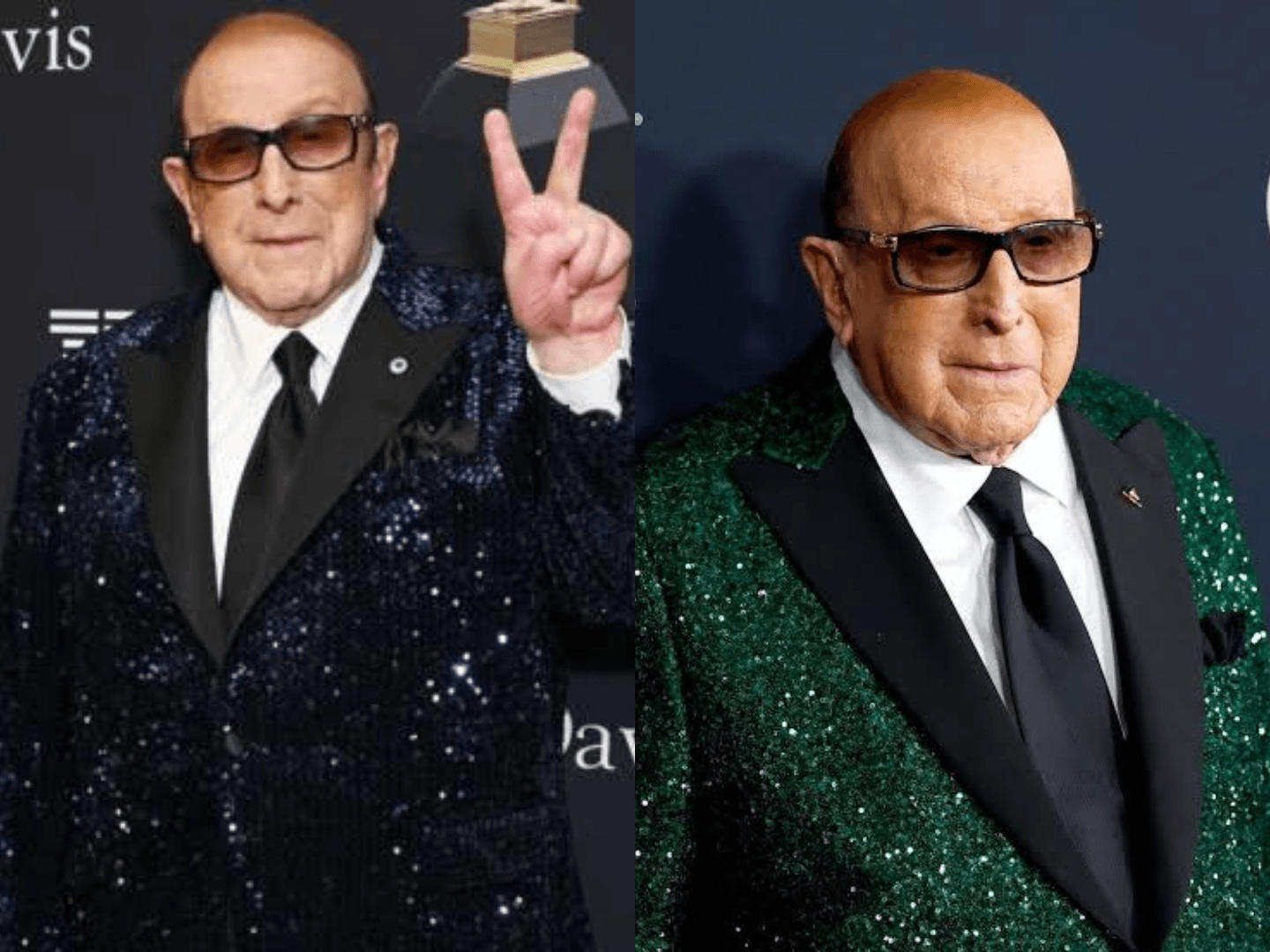
Clive Davis Net Worth: What Can Be Verified?
Clive Davis net worth cannot be established with a precise, authoritative figure from publicly available financial records. Several celebrity-focused publications have published estimates in the hundreds of millions of dollars, but no reliable primary source publicly confirms a specific total for his personal wealth or estate.
That distinction matters because net worth estimates can combine assumptions about property, investments, compensation, business interests, and other assets. Without an audited statement, probate inventory, or comparable primary financial disclosure, those estimates should be treated as approximations rather than established facts.
Davis built his fortune over more than six decades in the recording industry, holding senior positions at Columbia Records, Arista Records, J Records, RCA Music Group and Sony Music. His career also included documented real estate holdings and numerous professional ventures that generated substantial commercial value.
Sony Music confirmed Davis’s death on June 22, 2026, describing him as a legendary industry figure whose artistic judgment helped shape generations of music. The company emphasized his importance to Sony’s history and his lasting influence on artists and music executives.
Who Was Clive Davis?
Born in 1932 in Brooklyn, New York, Davis initially pursued law rather than entertainment. He graduated from New York University and later Harvard Law School before entering the music business, eventually becoming one of the industry’s most influential executives.
Davis joined the CBS Records Division as a contract lawyer in 1960, according to archival material from the Rock & Roll Hall of Fame. His legal expertise and negotiating ability helped him rise rapidly through the organization before becoming president of Columbia Records in 1967.
His career changed dramatically after attending the Monterey International Pop Festival in California in 1967. Davis recognized the commercial potential of emerging rock music and subsequently signed or championed artists who helped transform Columbia’s roster and the broader American recording business.
The Rock & Roll Hall of Fame records Davis’s association with artists including Janis Joplin, Bruce Springsteen, Billy Joel, Santana, Aerosmith and Blood, Sweat & Tears. His ability to identify commercially promising artists became the defining characteristic of his professional reputation.
Clive Davis and Columbia Records
As president of Columbia Records, Davis helped the label respond to the rapid expansion of rock and contemporary popular music. His tenure demonstrated that a major record company could pursue commercially successful artists while embracing changing musical tastes.
Davis’s signing of Big Brother and the Holding Company, featuring Janis Joplin, became particularly important to his reputation. The Rock & Roll Hall of Fame identifies the Monterey period and subsequent signings as pivotal moments in his development as a music executive.
His Columbia years also connected him with Bruce Springsteen, Santana, Billy Joel, Aerosmith and other significant performers. These relationships helped establish Davis as an executive who could recognize artists with both creative distinction and mainstream commercial potential.
Davis ultimately left Columbia in 1973 after being dismissed by CBS. Rather than ending his career, the setback preceded one of the most important second acts in the history of the American record business.Clive Davis Quick Bio
| Field | Details |
|---|---|
| Full name | Clive Jay Davis |
| Born | April 4, 1932 |
| Age | 94 at the time of his death in 2026 |
| Birthplace | Brooklyn, New York, U.S. |
| Nationality | American |
| Profession | Record executive, producer, music-industry leader |
| Education | New York University, B.A. magna cum laude, 1953; Harvard Law School, 1956 |
| Years active | 1960s–2026 |
| Notable work | Columbia Records, Arista Records, J Records, Sony Music; The Soundtrack of My Life |
| Awards & honors | 4 Grammy Awards; Recording Academy Trustees Award; Rock & Roll Hall of Fame inductee; NYU honorary doctorate |
| Net worth | Not publicly verified; published estimates are unconfirmed |
| Spouse/partner | No current spouse or partner was verified from the authoritative sources reviewed |
| Social media | No verified personal social-media account identified |
The biographical details above are based primarily on NYU, The Recording Academy/GRAMMYs, and other institutional sources. NYU confirms his 1932 Brooklyn birth, NYU and Harvard education, and his major career milestones. The Recording Academy confirms four Grammy wins and five nominations.
Note on net worth: I would not publish a specific dollar amount as fact. No authoritative source reviewed provides a verified total for Davis’s personal net worth or estate.
Founding Arista Records
In 1974, Davis founded Arista Records and quickly demonstrated that his influence extended beyond his earlier Columbia position. The new company gave him another opportunity to build a diverse roster while developing artists capable of reaching large mainstream audiences.
Arista’s early success was symbolized by Barry Manilow’s “Mandy,” which became a major pop hit. The Rock & Roll Hall of Fame’s archival biography identifies the song as Arista’s first single and notes its rapid commercial success.
Davis subsequently signed or developed artists including Whitney Houston, Patti Smith, Dionne Warwick, Aretha Franklin and the Grateful Dead. Arista’s roster crossed pop, rock, R&B and other genres, reflecting Davis’s willingness to pursue talent rather than restrict the company to one musical style.
Whitney Houston became perhaps the clearest example of Davis’s ability to identify exceptional potential. His relationship with Houston became one of the most consequential artist-executive partnerships of the modern recording industry, helping establish her as one of popular music’s defining vocalists.
J Records and Sony Music
Davis continued expanding his influence after Arista, including through J Records, which was established in 2000 in partnership with BMG. The label became associated with artists such as Alicia Keys, Maroon 5 and Luther Vandross.
The Recording Academy’s historical account states that Davis later became chairman and chief executive of the BMG U.S. Label Group, overseeing an expanded RCA Music Group that included J Records, RCA Records and Arista Records.
Following the BMG and Sony Music merger, Davis became chief creative officer of Sony Music Worldwide in 2008. The position allowed him to continue working with established artists while helping identify and develop newer performers.
Sony Music’s 2026 remembrance described Davis as having played a seminal role in the company’s history. Chairman Rob Stringer credited him with contributing substantially to Sony Music’s recorded legacy and mentoring people throughout the organization.
Artists Who Defined His Career
Davis’s professional legacy is inseparable from the careers of artists he signed, developed or championed. The Recording Academy identifies his work with performers including Whitney Houston, Alicia Keys, Santana, Barry Manilow, Jennifer Hudson, Kelly Clarkson and Leona Lewis.
His association with Santana produced one of his most significant Grammy achievements. Davis was a producer on Santana’s Supernatural, which won Album of the Year at the 2000 Grammy Awards and helped revitalize the veteran guitarist’s commercial career.
Davis also played an important role in Alicia Keys’s emergence as a major recording artist. His work at J Records placed him in the executive circle surrounding an artist whose early career became one of the label’s defining commercial successes.
The breadth of his roster distinguishes Davis from executives whose influence centered on one genre. His career touched rock, pop, R&B, soul, hip-hop, jazz fusion and other forms of popular music, helping make him a uniquely durable figure in American entertainment.
How Clive Davis Built His Wealth
The precise contribution of Davis’s executive salaries to his fortune cannot be established from authoritative public records. His senior positions, however, extended across some of the industry’s most important companies, giving him a career spanning Columbia, Arista, J Records, BMG, RCA and Sony Music.
Record-label leadership provided Davis with professional income, influence and access to major commercial enterprises. However, it would be misleading to assume that the financial performance of a label directly represented Davis’s personal wealth or that he personally owned every company he founded or led.
His business activities also extended beyond conventional executive employment. The Recording Academy documents Davis’s role in forming LaFace Records with Kenneth “Babyface” Edmonds and Antonio “L.A.” Reid in 1989 and creating Bad Boy Records with Sean Combs in 1994.
Those ventures demonstrate the breadth of Davis’s business interests, although publicly available authoritative sources do not provide enough information to calculate precisely how much personal wealth each venture generated for him.
Clive Davis’s Real Estate
Davis’s publicly documented real estate provides a useful example of his substantial personal assets without proving an overall net-worth figure. Forbes reported in 2019 that he was selling a Manhattan condominium in the Ritz Tower for $6.249 million.
The property consisted of two adjoining units that Davis had renovated into a roughly 2,800-square-foot residence with three bedrooms and four bathrooms. Forbes reported that the property had initially been listed for $7.8 million before the asking price was reduced.
That transaction is significant because it establishes the value of one documented property associated with Davis. It does not, however, establish his complete real estate portfolio, investment holdings, liabilities or total estate value.
Consequently, individual property transactions should be used as evidence of substantial assets rather than as a shortcut for calculating net worth. A person’s property value, after all, represents only one component of a complete financial balance sheet.
Grammy Awards and Industry Recognition
Davis won four Grammy Awards and received five nominations, according to the Recording Academy. His wins included Album of the Year for Santana’s Supernatural and awards connected with productions involving Jennifer Hudson and Kelly Clarkson.
The Recording Academy honored Davis with its Trustees Award in 2000, recognizing his significant contribution to the recording industry. He later received the President’s Merit Award at the 2009 Grammy Salute to Industry Icons event.
Davis was inducted into the Rock & Roll Hall of Fame in 2000 with the Ahmet Ertegun Award. The institution credits him with signing and guiding artists including Janis Joplin, Patti Smith, Whitney Houston and Santana.
His recognition extended beyond music-industry awards. In 2025, the Apollo Theater honored Davis through its Walk of Fame in Harlem and presented him with its Legacy Award, recognizing his decades of support for Black music and artists.
Philanthropy and Education
Davis also directed substantial attention toward philanthropy. The Recording Academy documented his efforts to support AIDS research, including a 1990 Arista anniversary benefit that raised $2 million for the cause.
His philanthropic activities were not limited to health-related causes. In 2002, Davis donated $5 million to New York University, helping establish the Clive Davis Department of Recorded Music at his undergraduate alma mater.
The university program reflected Davis’s broader interest in developing future music professionals. Rather than focusing exclusively on performance, the program recognized the importance of the recording industry, technology, business, production and other disciplines surrounding contemporary music.
His charitable work adds another dimension to assessments of his legacy. Although philanthropy does not determine net worth, documented donations provide concrete evidence of how Davis used part of his financial success and industry influence beyond commercial entertainment.
Clive Davis’s Own Perspective
Davis discussed his career and philosophy in interviews with the GRAMMY Museum, including a 2014 appearance connected with his autobiography, The Soundtrack of My Life. He described the importance of combining formal education with the ability to understand and work with people.
In that conversation, Davis offered a concise piece of advice from his parents: “Book knowledge is great but you got to couple it with people.” The comment reflects the combination of legal training, negotiation and personal judgment that characterized his career.
His autobiography also provides first-person context for the relationships and decisions that shaped his professional life. The book covers his experiences with artists including Bob Dylan, Janis Joplin, Barry Manilow, Whitney Houston, Carlos Santana, Aretha Franklin and Alicia Keys.
Clive Davis’s Lasting Legacy
Davis’s importance to the music industry cannot be measured solely through a net-worth estimate. His career demonstrates how an executive could influence popular culture by repeatedly identifying artists whose commercial success continued long after individual record-label relationships ended.
Sony Music’s tribute following his death emphasized his instinct for artists and ability to shape music across genres. That assessment is consistent with his documented career at Columbia, Arista, J Records, BMG, RCA and Sony Music.
His influence also survives through institutions and events bearing his name. The Clive Davis Department of Recorded Music at New York University and the long-running Pre-Grammy Gala represent lasting connections between his career, education and the wider music community.
The Pre-Grammy Gala became one of the industry’s most prominent annual events, bringing together major performers, executives and entertainment figures. The Recording Academy has described Davis’s partnership with the organization as a major part of Grammy Week for decades.
Frequently Asked Questions About Clive Davis Net Worth
What was Clive Davis’s net worth?
There is no authoritative public source confirming an exact figure for Davis’s net worth. Celebrity-oriented publications have published estimates ranging from hundreds of millions of dollars, but those numbers are not supported by publicly disclosed audited financial statements or an independently verified estate valuation.
How did Clive Davis make his money?
Davis accumulated his wealth through a long career as a record executive, label founder, producer and music-industry leader. His documented professional history includes senior positions at Columbia Records, Arista Records, J Records, BMG, RCA Music Group and Sony Music.
Which record labels did Clive Davis found?
Davis founded Arista Records in 1974 and later established J Records in partnership with BMG in 2000. He also participated in the creation of LaFace Records and Bad Boy Records, according to the Recording Academy’s historical account.
Which artists were associated with Clive Davis?
Among the many artists associated with Davis are Whitney Houston, Janis Joplin, Bruce Springsteen, Santana, Barry Manilow, Patti Smith, Aretha Franklin, Alicia Keys and Jennifer Hudson. His documented career covered several generations and numerous musical genres.
Was Clive Davis a Grammy winner?
Yes. The Recording Academy credits Davis with four Grammy wins and five nominations. His recognized work included Santana’s Supernatural, Jennifer Hudson’s self-titled album and Kelly Clarkson’s Breakaway, demonstrating his involvement across different eras and genres.
Conclusion
Clive Davis’s wealth was undoubtedly substantial, but his exact net worth cannot be responsibly stated as a verified fact based on publicly available authoritative evidence. Reported estimates should therefore be identified as estimates rather than presented as confirmed financial figures.
What can be established with confidence is the extraordinary scale of Davis’s professional career. From Columbia Records to Arista, J Records, BMG, RCA and Sony Music, he repeatedly influenced the direction of popular music.
His relationships with artists such as Whitney Houston, Santana, Janis Joplin, Barry Manilow and Alicia Keys helped define multiple generations of recorded music. His four Grammy wins, Rock & Roll Hall of Fame induction and philanthropic contributions further document his extraordinary influence.
For that reason, any discussion of Clive Davis net worth should distinguish carefully between unsupported financial estimates and verifiable achievements. His precise fortune remains uncertain, while his importance to the music industry is extensively documented by the institutions that shaped and recognized his career.
