
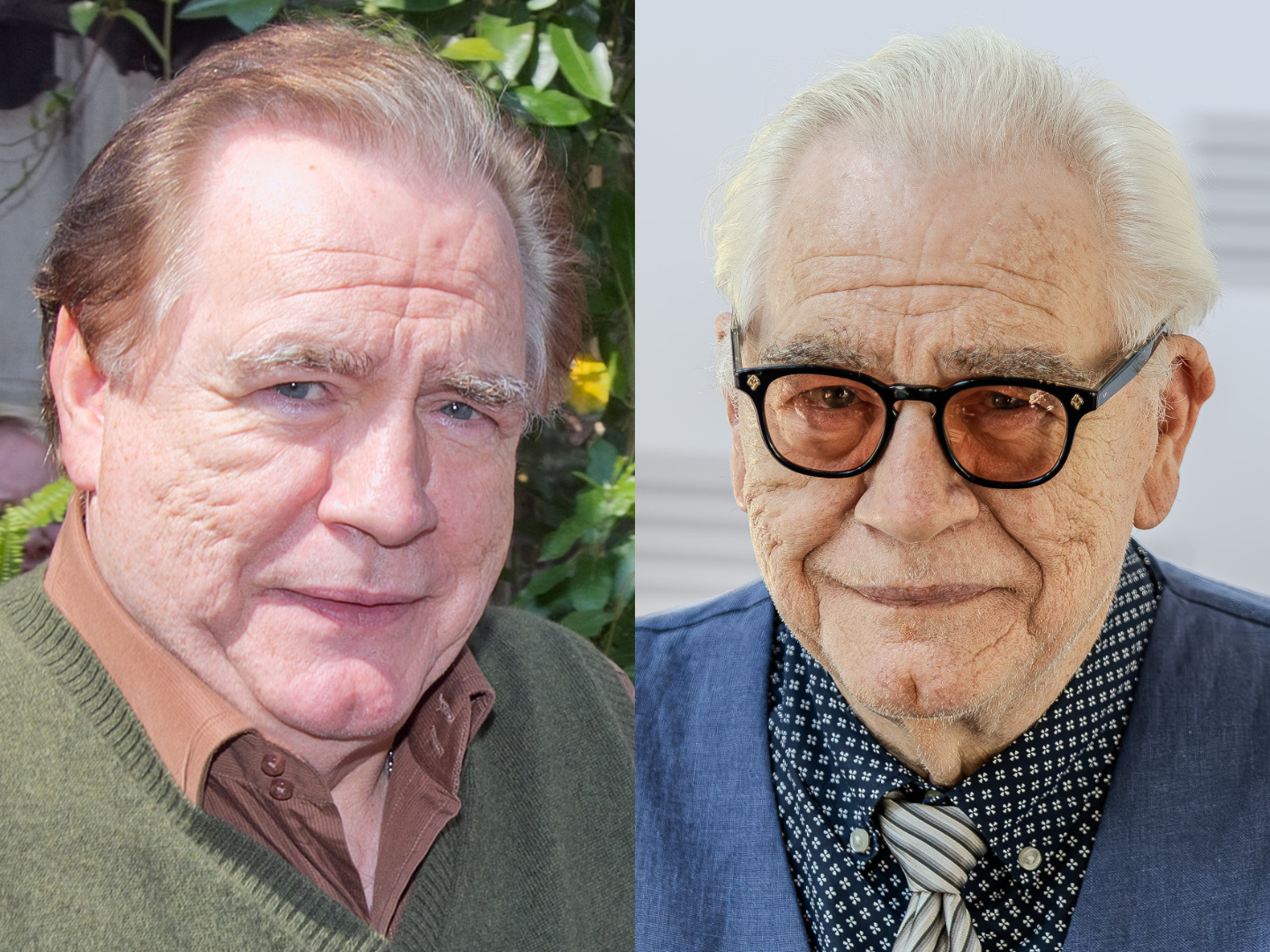
Brian Cox is a Scottish actor born in Dundee in 1946 whose career spans more than six decades across theatre, film, and television . He gained global fame as Logan Roy in HBO’s Succession, winning a Golden Globe and a Primetime Emmy, and was the first actor to play Hannibal Lecter on screen .
Early Life and Origins in Dundee
Brian Cox was born on June 1, 1946, in Dundee, Scotland, the youngest of five children . His father ran a grocery shop and died of pancreatic cancer when Cox was just eight years old . This loss plunged the family into severe financial hardship.
His mother suffered from severe mental illness and was institutionalized for much of his childhood, leaving Cox to be raised primarily by his older sisters . The poverty he experienced during these years would shape his worldview for life.
Cox has spoken candidly about going hungry as a child, sometimes relying on batter scraps from the local fish and chip shop for dinner . He credits these experiences with instilling in him a lifelong socialist outlook. “When you know poverty you know what socialism is and that we have to look after our people,” he told BBC Radio 4 .
He caught the acting bug at around two or three years old, performing Al Jolson impersonations at family New Year’s parties in Dundee . He left school at fourteen and began working at the Dundee Rep Theatre, initially mopping floors and watching actors rehearse .
Breakthrough: Hannibal Lecter in Manhunter
Cox’s first major film role came in 1986 when he was cast as Dr. Hannibal Lecter in Michael Mann’s Manhunter, based on Thomas Harris’s novel Red Dragon . He was the first actor ever to portray the character on screen, five years before Anthony Hopkins won an Oscar for The Silence of the Lambs .
Cox was cast while performing in a play off-Broadway, after a casting director in the audience put him on tape . His portrayal was notably different from Hopkins’s interpretation. Cox has said he played Lecter as “insane” while Hopkins played him as “mad” .
The film was not a box office success, and Cox was not asked to reprise the role . He has revealed that he and Hopkins agreed never to discuss their respective portrayals of Lecter, following a misunderstanding that arose from a newspaper interview . Despite its initial commercial failure, Manhunter has since been reappraised by critics and fans .
Theatrical Career and Shakespearean Roles
Before his film breakthrough, Cox built a formidable reputation on the British stage. He trained at the London Academy of Music and Dramatic Art (LAMDA) and went on to work with the Royal Lyceum Theatre, the Royal National Theatre, and the Royal Shakespeare Company .
His portrayal of King Lear at the National Theatre first brought him widespread critical recognition . He won two Laurence Olivier Awards for Best Actor, for Rat in the Skull in 1984 and Titus Andronicus in 1988 .
Cox has also appeared extensively on Broadway, including in Strange Interlude, Art, and The Great Society . His stage work remains a defining aspect of his career, demonstrating a range that spans from classical tragedy to contemporary drama.Brian Cox Quick Bio
Major Film Roles
Throughout the 1990s and 2000s, Cox appeared in a string of major Hollywood films. He played Argyle Wallace in Mel Gibson’s Braveheart in 1995, and appeared as Liam Neeson’s adversary in Rob Roy the same year . He has spoken fondly of Gibson, describing him as “a great director, underrated” .
Other notable credits include The Bourne Identity in 2002 as Ward Abbott, X2: X-Men United in 2003 as William Stryker, and Troy in 2004 as Agamemnon . He also appeared in Spike Lee’s 25th Hour and Spike Jonze’s Adaptation, playing screenwriting guru Robert McKee .
Cox received particular acclaim for his role in L.I.E. in 2001, playing a paedophile who becomes a father figure to a teenage boy . The performance earned him significant critical recognition and demonstrated his willingness to take on challenging, morally complex characters.
Logan Roy and Succession
Cox’s most iconic recent role is that of Logan Roy, the ruthless media patriarch in HBO’s Succession, which ran from 2018 to 2023 . The role brought him global fame and a new level of recognition late in his career.
For his performance, Cox won the Golden Globe for Best Actor in a Television Series – Drama in 2020 and the Primetime Emmy for Outstanding Lead Actor in a Drama Series the same year . He has described Logan Roy as “the antithesis” of who he is as a man .
Cox has revealed that he initially had reservations about playing such a “horrible” character . He also worked closely with showrunner Jesse Armstrong to reduce Logan’s dialogue, making the character more mysterious and imposing .
The character’s death in the fourth season was a major television event, though Cox has said he felt Logan should have died later in the season to better serve the show’s narrative arc . He also admitted he never watched the series finale, joking that “dead people don’t watch things like that.”
Recent and Ongoing Projects
Cox made his feature directorial debut with Glenrothan, a comedy-drama set in the Scottish Highlands . The film tells the story of two estranged brothers, played by Cox and Alan Cumming, who are at odds over the future of their family’s whisky distillery . It premiered in 2025 and runs approximately 99 minutes .
He has also toured with a one-man show titled It’s All About Me!, which focuses on his life and career . The show was scheduled for dates in Dublin and Belfast in October 2025, with Cox describing it as “sharing the stage with myself” .
Most recently, Cox has been set to star in The Score at the Theatre Royal Haymarket in London’s West End, playing Johann Sebastian Bach opposite his wife Nicole Ansari-Cox as Bach’s wife Anna . This marks a return to the stage for Cox, whose theatrical roots remain central to his identity as an actor.
Conclusion
Brian Cox’s career demonstrates remarkable longevity and versatility, spanning from the backstreets of Dundee to the heights of Hollywood and prestige television . At nearly eighty, he remains active as an actor, director, and stage performer, with no signs of slowing down.
His working-class origins and early experiences with poverty continue to inform his perspective and his choice of roles . Cox has spoken of a lingering fear of returning to poverty, describing it as a “Sword of Damocles” that hangs over him despite decades of success .
From being the first actor to bring Hannibal Lecter to the screen, to creating one of television’s most memorable characters in Logan Roy, Cox has built a body of work that reflects both his extraordinary range and his willingness to take on challenging, complex roles.
Q: What is Brian Cox best known for?
A: Brian Cox is best known for playing Logan Roy, the media patriarch in HBO’s Succession, a role that won him a Golden Globe and a Primetime Emmy. He was also the first actor to portray Hannibal Lecter on screen in Manhunter (1986).
Q: Did Brian Cox win any awards for Succession?
A: Yes. Cox won the Golden Globe for Best Actor in a Television Series – Drama and the Primetime Emmy for Outstanding Lead Actor in a Drama Series, both in 2020. He has also won two Laurence Olivier Awards for his stage work.
Q: What was Brian Cox’s childhood like?
A: Cox was born in Dundee, Scotland in 1946 and lost his father to pancreatic cancer when he was eight years old. His mother was hospitalized for severe nervous breakdowns, and the family experienced crippling poverty, sometimes going hungry. He began working at Dundee Rep Theatre as a teenager before training as an actor.
Q: Has Brian Cox directed any films?
A: Yes. Cox made his feature directorial debut with Glenrothan, a film set in the Scottish Highlands about two estranged brothers reuniting at their family’s whisky distillery. The film premiered at the Toronto International Film Festival in September 2025, and Cox also stars in it alongside Alan Cumming.
Q: Did Brian Cox watch the Succession finale?
A: No. Cox admitted he never watched the final episode, explaining that he knew how Logan’s story would end and was disinclined to watch the rest. He has also said he felt Logan died too early in the final season, telling people the show was called Succession for a reason.
